The Coal Question Comes Back
Jevons, the rebound, and the AI efficiency paradox
The promise attached to artificial intelligence, repeated by the firms selling it and the executives buying it, is that the technology will make work lighter. Fewer hours on the dull parts, more time for the rest. The early evidence from the labour market points the other way, at least for the people trying to enter it. Drawing on the payroll records of millions of American workers, Stanford’s Digital Economy Lab and ADP, a payroll processor, found that employment for early-career workers aged 22-25 in software development, the most AI-exposed occupation, fell by nearly 20% from a late-2022 peak to July 2025; across all high-exposure occupations for that cohort the decline ran closer to 13-16%. Over the same period, employment for workers over 30 in those occupations grew by between 6% and 13%.
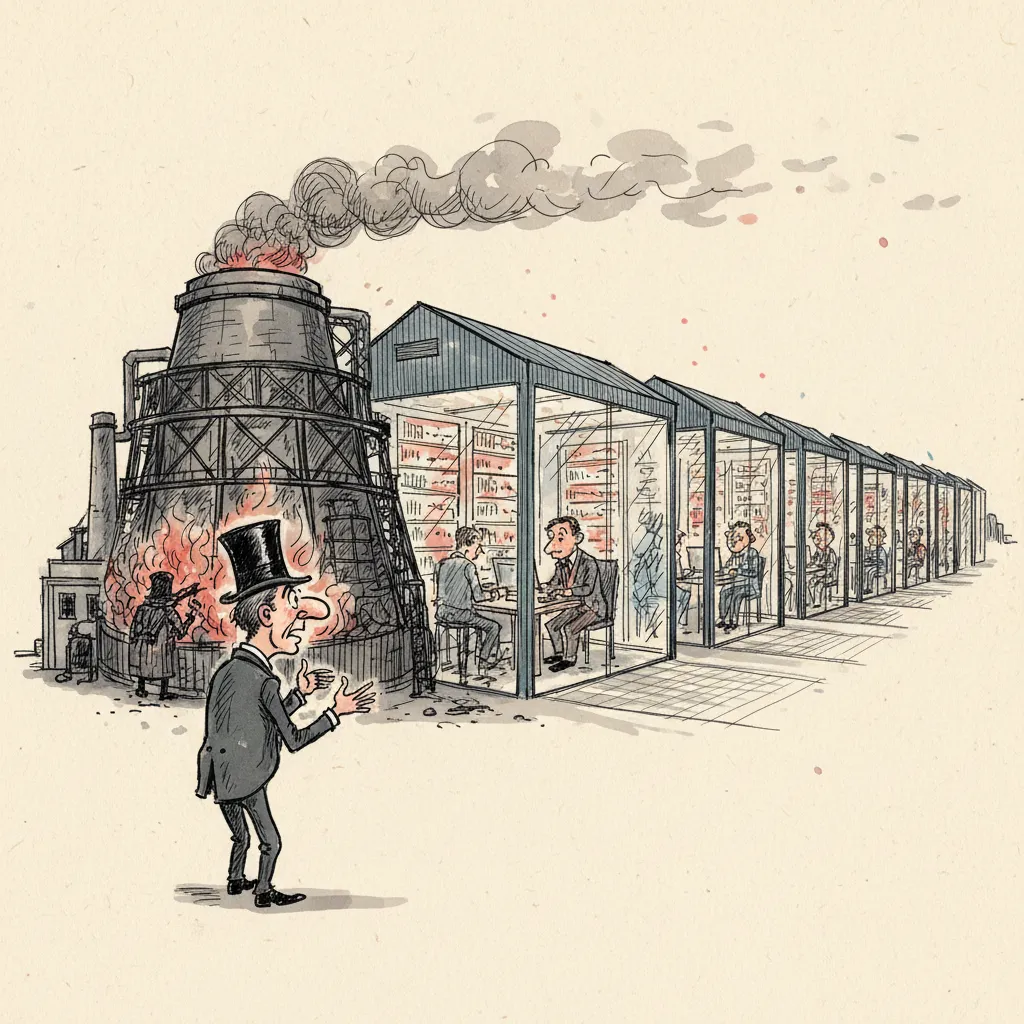
The pattern is far older than the computer that produced it. In 1865 a young English economist, William Stanley Jevons, published “The Coal Question”, a book about the one anxiety then gripping industrial Britain: that the coal underpinning its power would run out. The comforting answer of the day was efficiency. Better steam engines burned less coal per unit of work, so surely they would stretch the supply. Jevons argued the reverse, and the mechanism he described has held for 160 years across one resource after another: the cheaper something is to use, the more of it gets used.
Two different resources are in play when a developer sits down with an AI assistant, and they move in opposite directions. The first is compute, the raw machine work of running the model. Here Jevons applies in the textbook way: as each unit of useful output gets cheaper, the total quantity demanded climbs, and climbs by more than the per-unit saving falls. The second resource is the developer’s own labour. Inside a fixed task, a tool that doubles a person’s output does not summon twice the work; it lets the employer clear the same work with fewer people. Compute demand rebounds while headcount is economised away.
The worker who keeps a job meets the rebound as added workload. The exploded volume of output that cheap compute makes possible has to be supervised, corrected and integrated by human beings. The pattern the payroll data implies is a single senior developer producing what once took a fuller team, a mechanism the researchers describe without putting a ratio on it.
The Stanford-ADP decline is associational, not causal. Disentangling AI from an ordinary post-pandemic correction, which fell heavily on recent graduates regardless of any algorithm, is difficult, and nobody has done it cleanly, so the figure remains provisional.
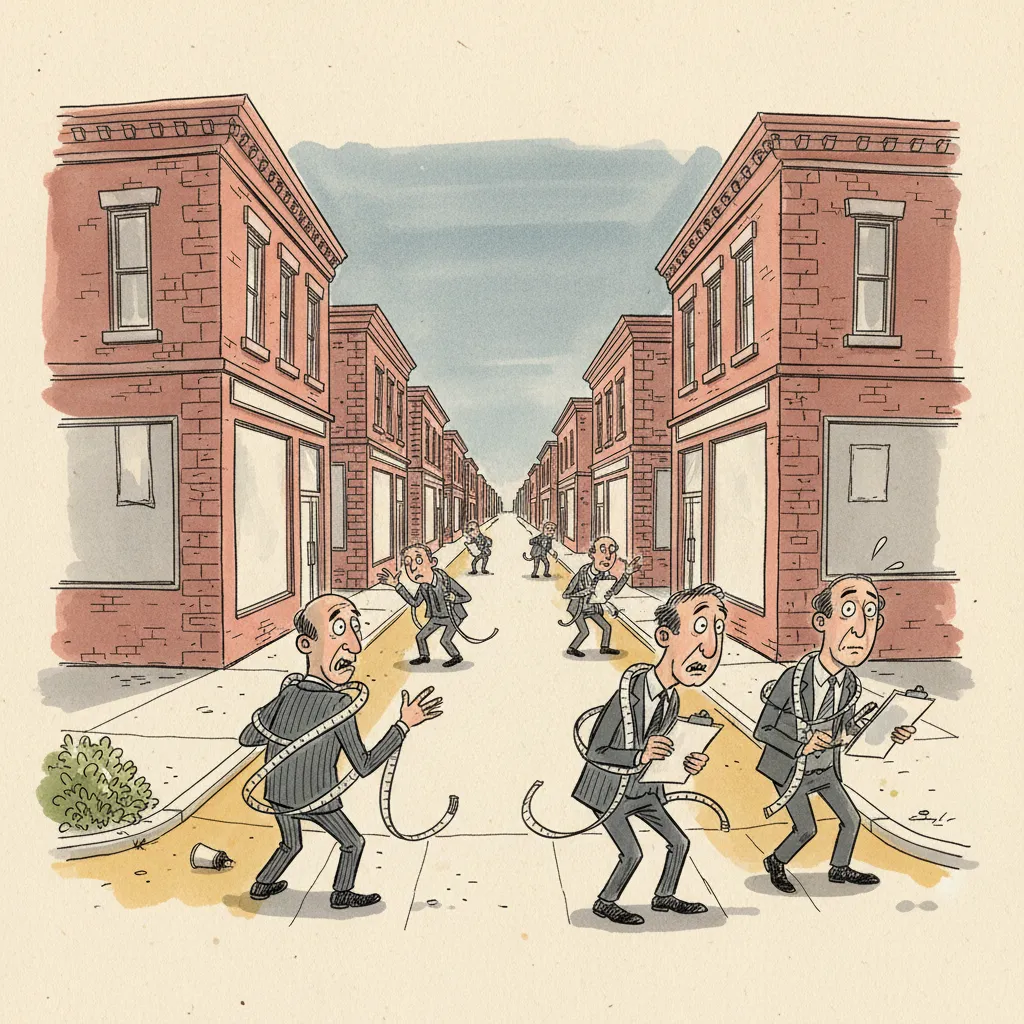
The case for optimism rests on a real piece of history. When the automated teller machine arrived, it was expected to end the bank teller, and did the opposite. James Bessen, a technology economist at Boston University, documented the mechanism: the ATM cut the number of tellers a branch needed from about 20 to 13, which made branches cheaper to run, so banks opened far more of them. Total teller employment in America rose from 485,000 in 1985 to 527,000 in 2002. Automation, in this telling, is a complement that grows the work it touches.
The ATM, though, expanded along a dimension that AI does not share. Branches are physical. Opening more of them meant renting more high-street space and hiring people to staff it; the expansion was horizontal and it had to employ humans to happen. Cognitive work has no such constraint. A firm that finds its software output suddenly cheaper does not open branches. It scales the output vertically, bounded only by how much a senior worker can review, and that bound does not require fresh hiring to relax. The same forces still generate genuine demand for AI skills: American job postings mentioning AI ran 134% above their pre-pandemic baseline at the end of 2025, and the Bureau of Labor Statistics still projects software-developer employment to grow 15% over the decade to 2034. But none of that restores the physical expansion that turned the last wave of automation into more jobs instead of fewer.
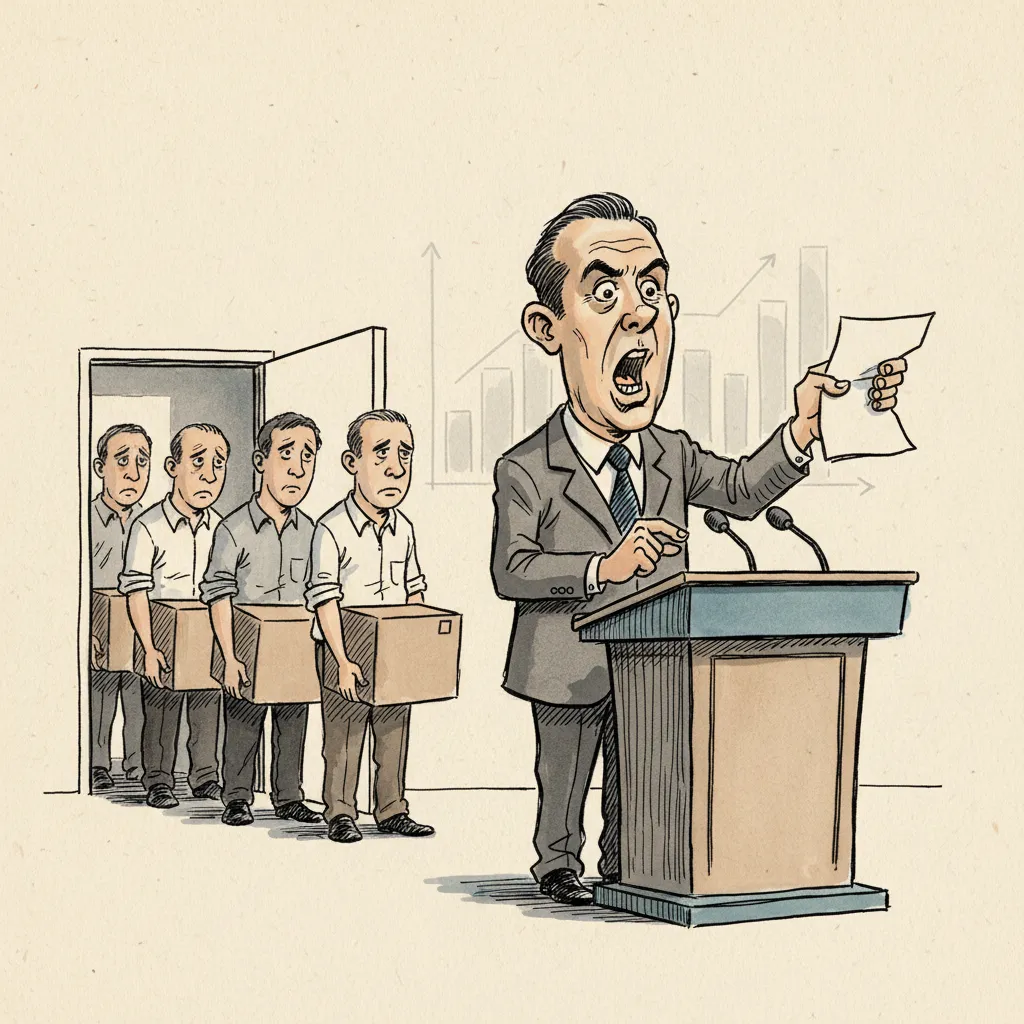
The displacement stopped being theoretical in 2025, when named firms cut roles and attributed the cuts to AI. Duolingo, the language-learning company, cut roughly 10% of its translator contractors after integrating generative AI into its content pipeline; the work those translators had been doing was now handled by automation, and the company’s announcement made the AI link explicit. IBM paused hiring for some 7,800 back-office and human-resources roles it judged AI could absorb. Amazon trimmed roughly 14,000 corporate posts under an efficiency mandate, though its chief executive attributed the cuts to culture and bureaucracy rather than to AI.
“AI made us efficient” is a flattering reason for a layoff a company wanted for duller reasons, and critics call the genre AI-washing: cuts driven by high interest rates, over-hiring during the pandemic boom, or plain mismanagement, dressed up in the language of transformation. It remains ambiguous how many of the 123,653 tech-sector layoffs recorded through May 2026, by the count of Challenger, Gray & Christmas, were a machine replacing a person rather than a story replacing an awkward one. The narrative is partly cover, though the structural shift underneath it is real.

Whatever the cause of the cuts, the people who keep their jobs face the other half of the mechanism, the half that rarely gets counted. Efficiency was supposed to return time. In 1930 John Maynard Keynes predicted that within a century rising productivity would so easily meet our material needs that the standard working week might fall to 15 hours, the surplus spent on culture and leisure. The productivity growth arrived. The working week barely moved, because the gains were absorbed into higher expected output and new wants, with Keynes’s century now four years from its end.
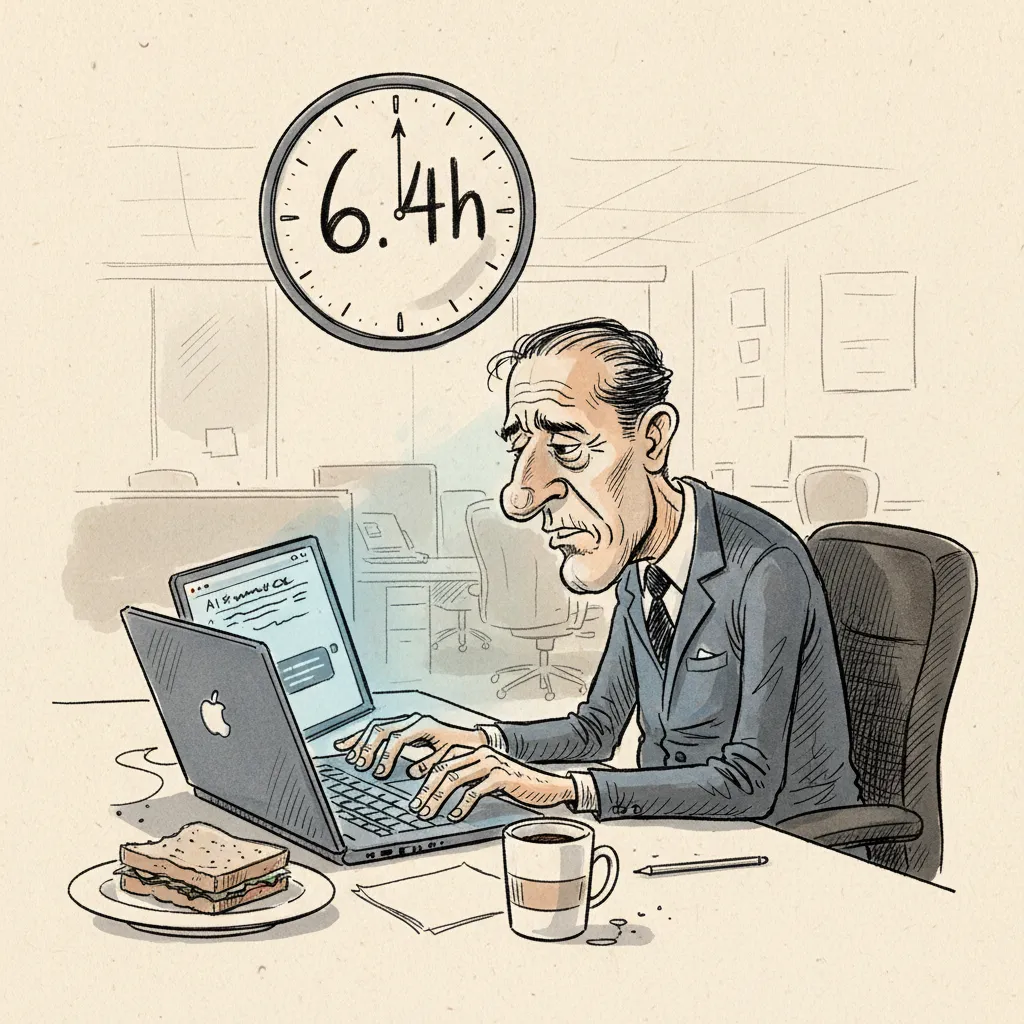
Today’s version of that absorption now has a name. Glean, a workplace-software company, named the phenomenon “botsitting” this year and estimated that white-collar staff were spending an average of 6.4 hours a week, close to a full working day, prompting, correcting and supplying context to AI systems. (The figure draws on a 6,000-person survey and Glean’s own platform data, and needs independent corroboration.) Other work points the same way. An Upwork study in 2024 found that 77% of employees using AI tools said the tools had increased their workload rather than lightened it, leaving them markedly more prone to burnout. Researchers at UC Berkeley’s Haas School of Business, writing in Harvard Business Review in February 2026, found that AI tools consistently intensified knowledge work rather than reducing it, warning of workload creep, cognitive strain and weakened decision-making.
The mechanism is straightforward, even if the numbers are not. A developer who feels the AI assistant move faster than they ever did has experienced a real saving on the visible part of the work. The cursor moves, code appears, a problem that would have taken thirty minutes of typing gets solved in five minutes of prompting. What does not appear in that count is the rest of the day, the share of it spent reviewing the output, correcting what looked right and wasn’t, debugging the dependency the model invented and then forgot, and explaining the result to a colleague who has to ship something that has to work with it. The saving is concentrated, the cost is spread thin, and the difference between the two is what Jevons watched in 1865 when a steam engine that burned less coal per cycle did not, in the end, leave any coal in the ground.
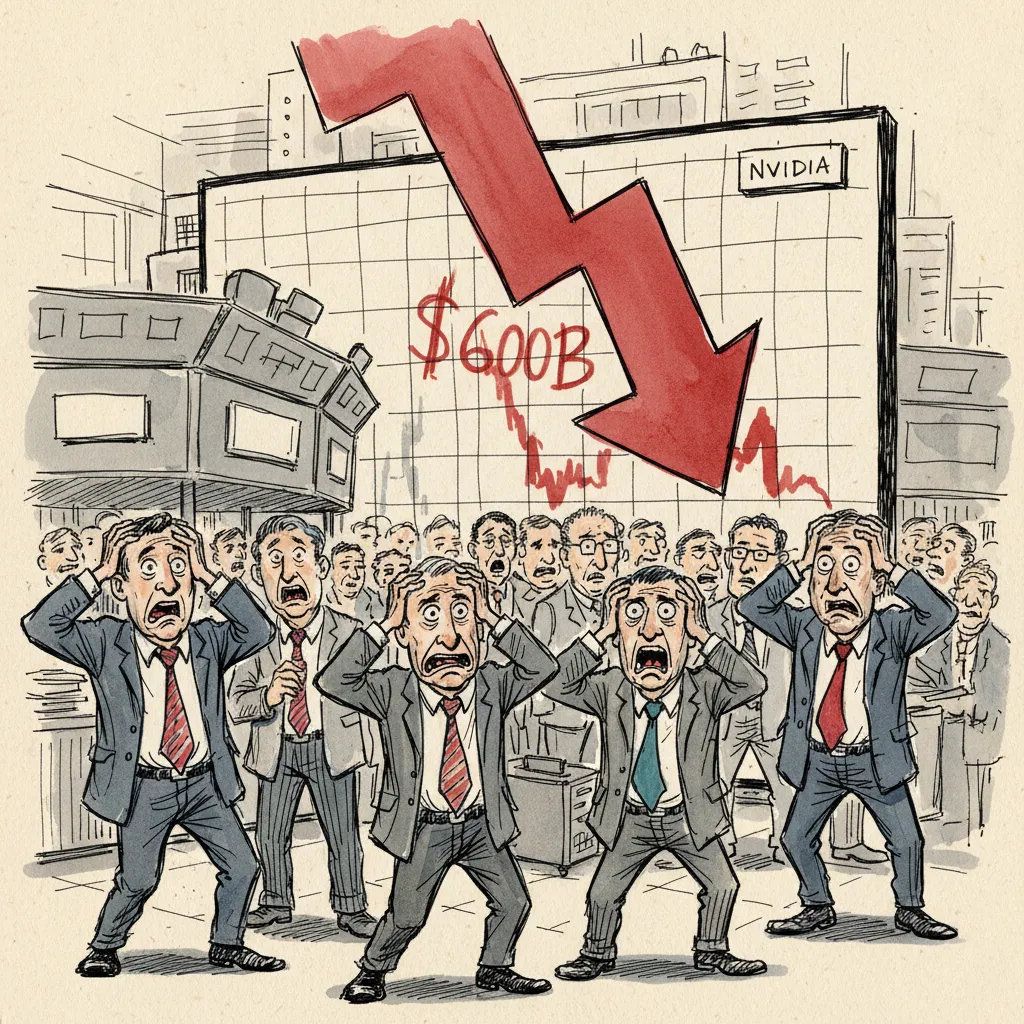
Even the people with most to lose by saying so have named the rebound out loud. In January 2025 a Chinese startup, DeepSeek, released a model matching the best American systems at a fraction of the training cost. The market drew the intuitive inference: if intelligence is suddenly this cheap, far less hardware will be needed to supply it. Nvidia, which makes the chips, lost nearly $600bn of market value in a single day, the largest one-day fall in American corporate history.

The inference was the precise confusion Jevons had named. The man running one of the planet’s largest AI build-outs said so within hours. Satya Nadella, Microsoft’s chief executive, posted that “Jevons paradox strikes again”, and that as AI got more efficient and accessible its use would “skyrocket, turning it into a commodity we just can’t get enough of”. Some analysts took the opposite view, arguing in good faith that efficient models could hold capital expenditure to a $40bn-$60bn range per provider and let firms run lean systems locally. The spending settled the argument. Aggregate capital expenditure by the four largest cloud providers is set to approach $700bn in 2026, close to double the prior year’s total, with around three-quarters of it earmarked for AI. The efficiency shock did not bend the curve down; it was followed by the steepest climb in capital spending yet.
Jevons watched James Watt’s far more efficient engine, rather than sparing Britain’s coal, make steam power cheap enough to spread across railways, factories, mines and ships, until the total burned rose. He put the principle directly: “It is wholly a confusion of ideas to suppose that the economical use of fuel is equivalent to a diminished consumption. The very contrary is the truth.” The same inversion has since shown up on resources with nothing to do with coal. More efficient engines lowered the cost of a mile and Americans drove more of them. Light-emitting diodes cut the cost of a lumen, the latest step in a long history in which every cheaper light source has been answered by using far more light. The per-unit saving is always genuine, and always outweighed by the rise in total use.
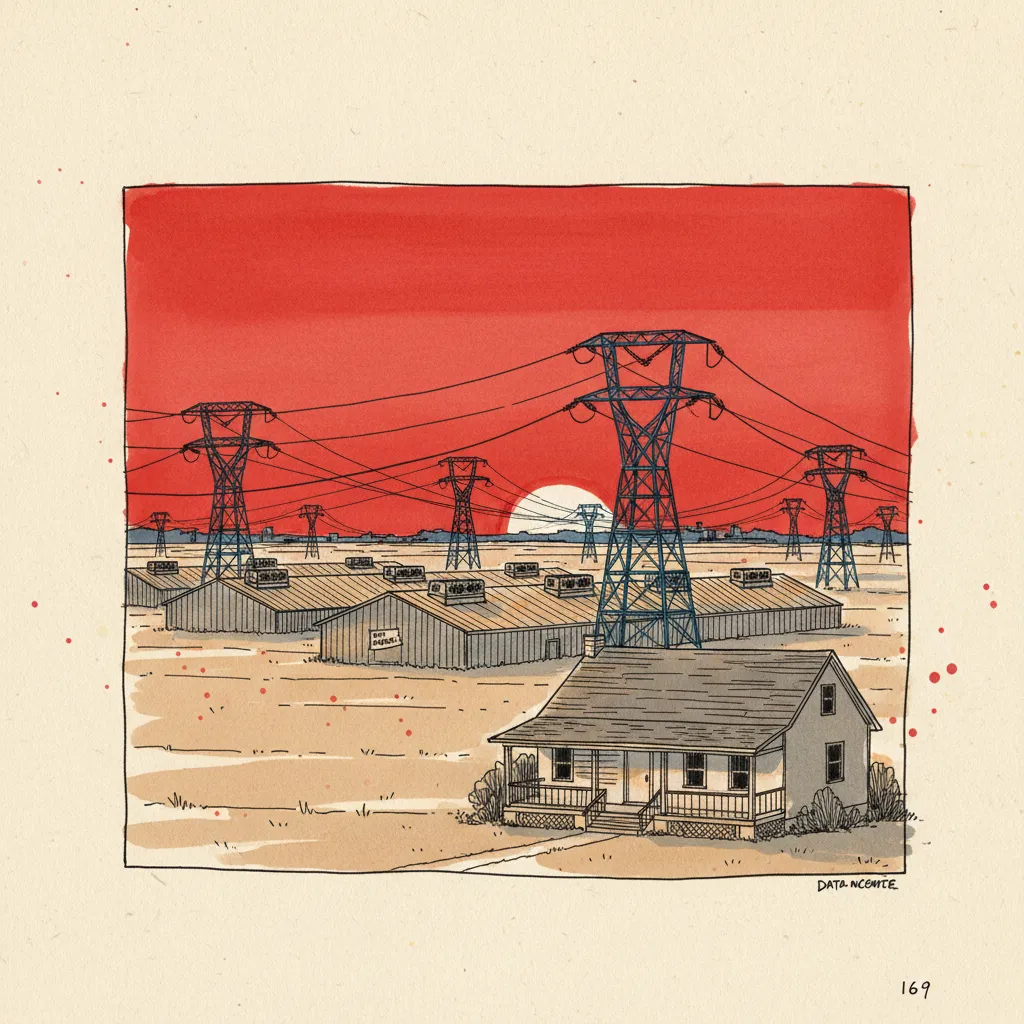
The present case differs from the Victorian one in two things: its medium and its speed. Jevons described a rebound bounded by geography and national borders, unfolding over decades. The same logic now runs on a digital medium that scales without those limits, and its one hard ceiling is physical: a power grid that has to be built. That grid is already straining. In the data-centre corridors of northern Virginia, utilities have sought steep rate rises from ordinary households and warned of multi-year waits to connect new load.
How far the labour displacement runs depends on a single unknown: whether the cognitive frontier keeps advancing or levels off. If it plateaus, AI stays a complement: humans retain judgement, taste and the work of defining new problems, the build-out keeps generating demand for people, and the collapse of entry-level hiring turns out to be a painful transition of the kind the ATM era eventually absorbed. If the frontier does not plateau, the automation reaches the senior tier too, and the worry about a severed talent pipeline becomes moot, because a firm does not need the experienced workers it never trained. The blunt version of that conclusion is that humans are simply not that useful at the task, though the claim is asserted far more often than it is shown.
Either way, the talent pipeline is the live risk. Stop hiring and training juniors now and the supply of seasoned engineers a decade from now is cut off at the source. That points to two debated futures, neither yet decidable: a steep wage premium for the dwindling pool of senior talent, or AI advancing far enough to make the human pool unnecessary. In 2026 the resolution is speculative, and the people best placed to find out are the firms running the experiment on their own workforces.
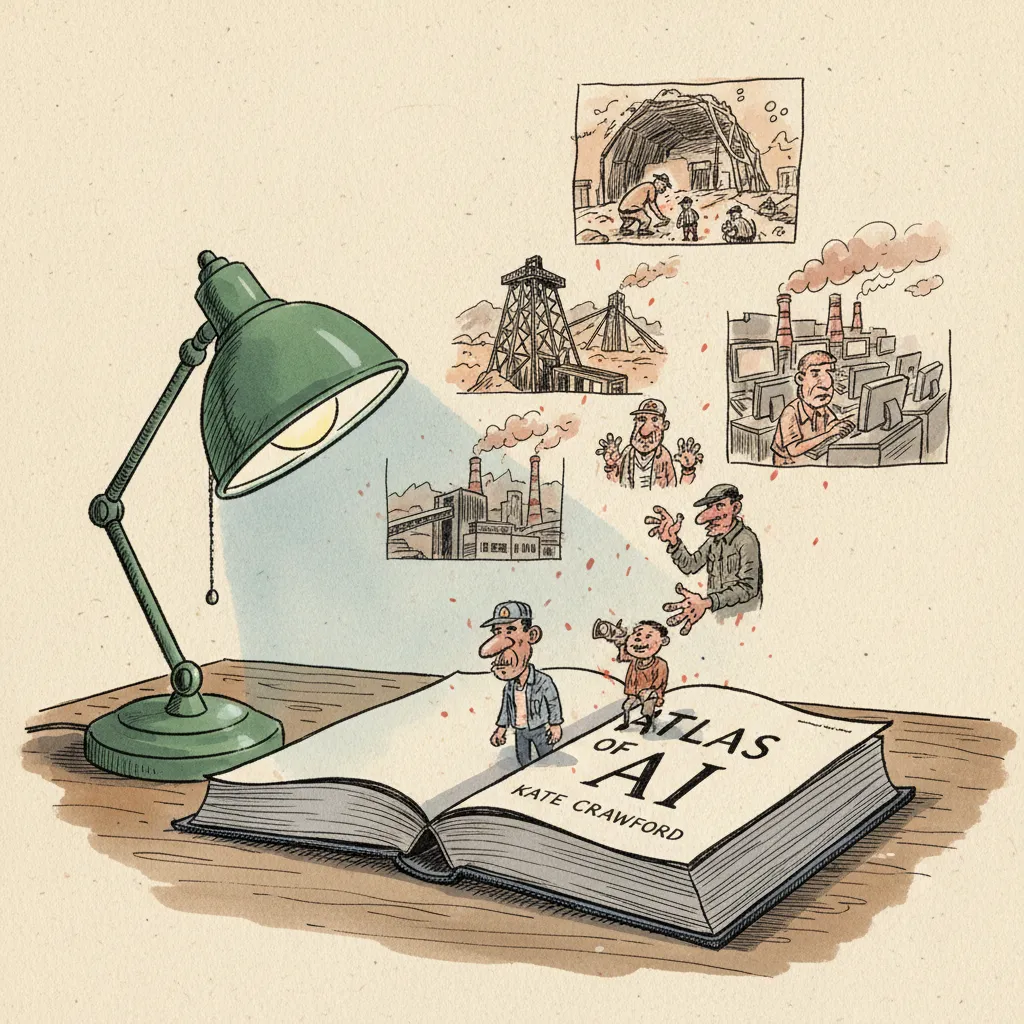
None of this displaces the more familiar account of AI’s physical cost. Kate Crawford’s “Atlas of AI” reframed the technology as an extractive industry, a supply chain reaching into cobalt and lithium and rare earths, and the labour of the people who mine and label at its base. That account is correct about where the footprint comes from. It does not explain the footprint’s velocity, and on its own logic efficiency ought to shrink the burden, since leaner models would need fewer chips and less metal. The rebound is the demand-side complement: the saving per query is more than cancelled by the multiplication of queries. Extraction explains where the footprint comes from; the rebound explains why it keeps expanding however efficient the engineering becomes.
The vanishing entry-level jobs, the hours added to those who remain, the spending that rose after the price fell, all of it leaves a single question. AI will keep getting cheaper and more capable; nobody disputes that. The unanswered question is why the promise riding on that efficiency keeps finding takers, when 160 years of the same outcome sit in plain view.
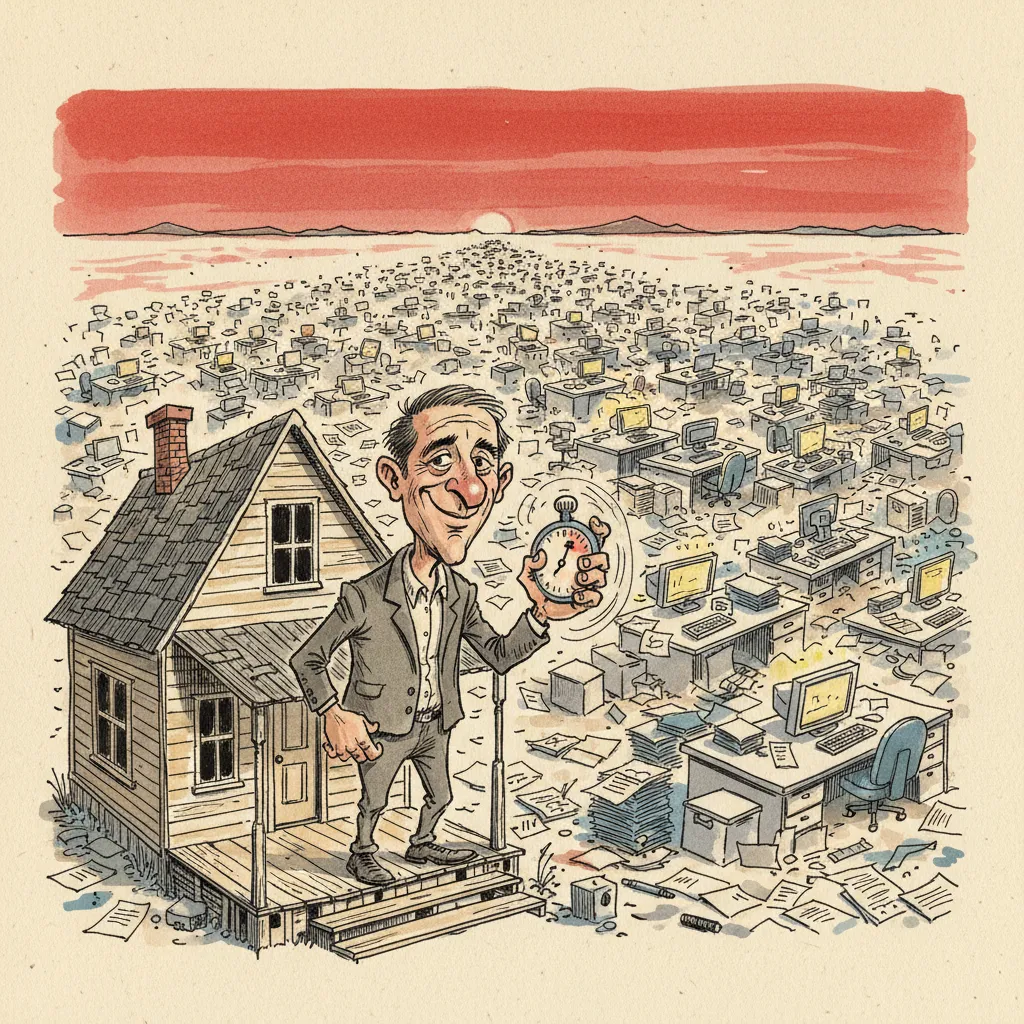
Part of the answer sits in what every developer using AI knows already. From inside a single task the saving is real and immediate; the tool does help, here, now, on this. Only when the individual savings are added up across everyone and every task does the freed time disappear into more work, more output, more demand. So why, knowing all of this, do we keep expecting this time to be the one the saving comes back to us?
The newsletter
New pieces as they ship. Unsubscribe whenever.